
Emergence, quietly practiced. An afternoon with Steven Kou
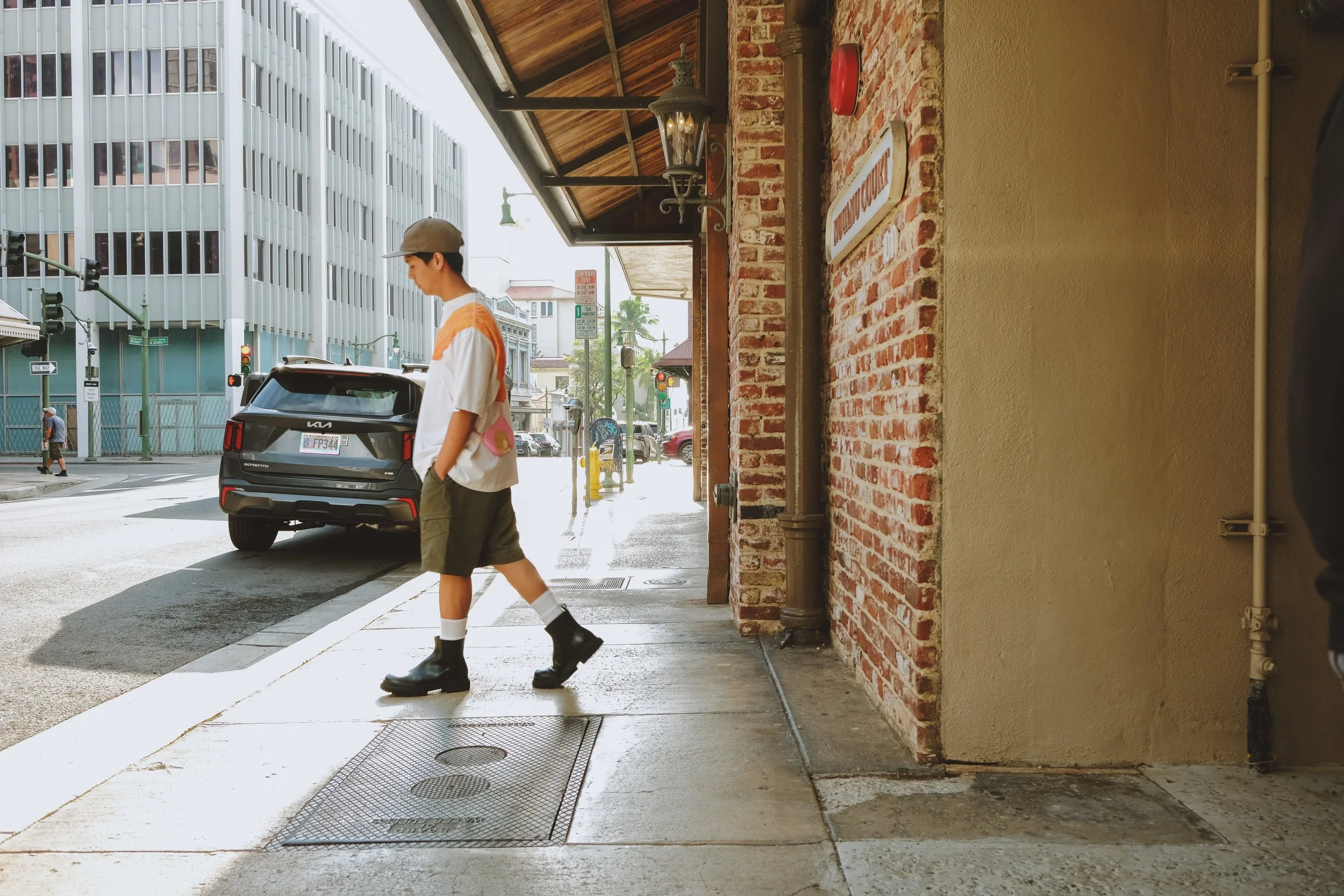
Emergence is easier to recognize in hindsight. In real time, it looks more like routine. A Saturday evening. A bedroom studio tucked into a garage. A producer just sitting down without thinking too far ahead about what the work might become. For Steven Kou, growth has never felt like an arrival. It feels like returning — week after week — to the same small space and seeing what shows up.
Kou was born in Manila and raised in Hawaiʻi. He is also a student studying electrical engineering, though he speaks about music more easily than coursework. His songs feel intimate without asking for too much, warm without becoming soft. Lovers rock and R&B surface in his work, but rarely by design. They appear after the fact, the result of how he builds rather than what he sets out to make.
He starts with structure. An ostinato. A bassline. A beat sturdy enough to hold everything else. “I’m a producer first,” he says. “I’ve been producing since I was thirteen or fourteen.” The foundation comes before anything emotional. Once that’s in place, the rest can move.
The studio sits inside his bedroom. On Saturdays, he usually starts around five. It’s the furthest point from school — from deadlines, lectures, and the language of evaluation. That distance matters. If he thinks too much about expectations, he knows he’s already drifted back into another headspace. “I have to be as far from academics as possible,” he says. Only then does he open the laptop.
Lyrics arrive later. Often after reading. Kou spends a lot of time with books, especially French literature. Proust. Dumas. Les Misérables. He talks about the mood of the language more than the stories themselves. Reading doesn’t supply content so much as momentum. A sentence lands, a feeling lingers, and writing feels necessary. “When something hits, I have to jot it down,” he says. “That’s usually how it starts.”
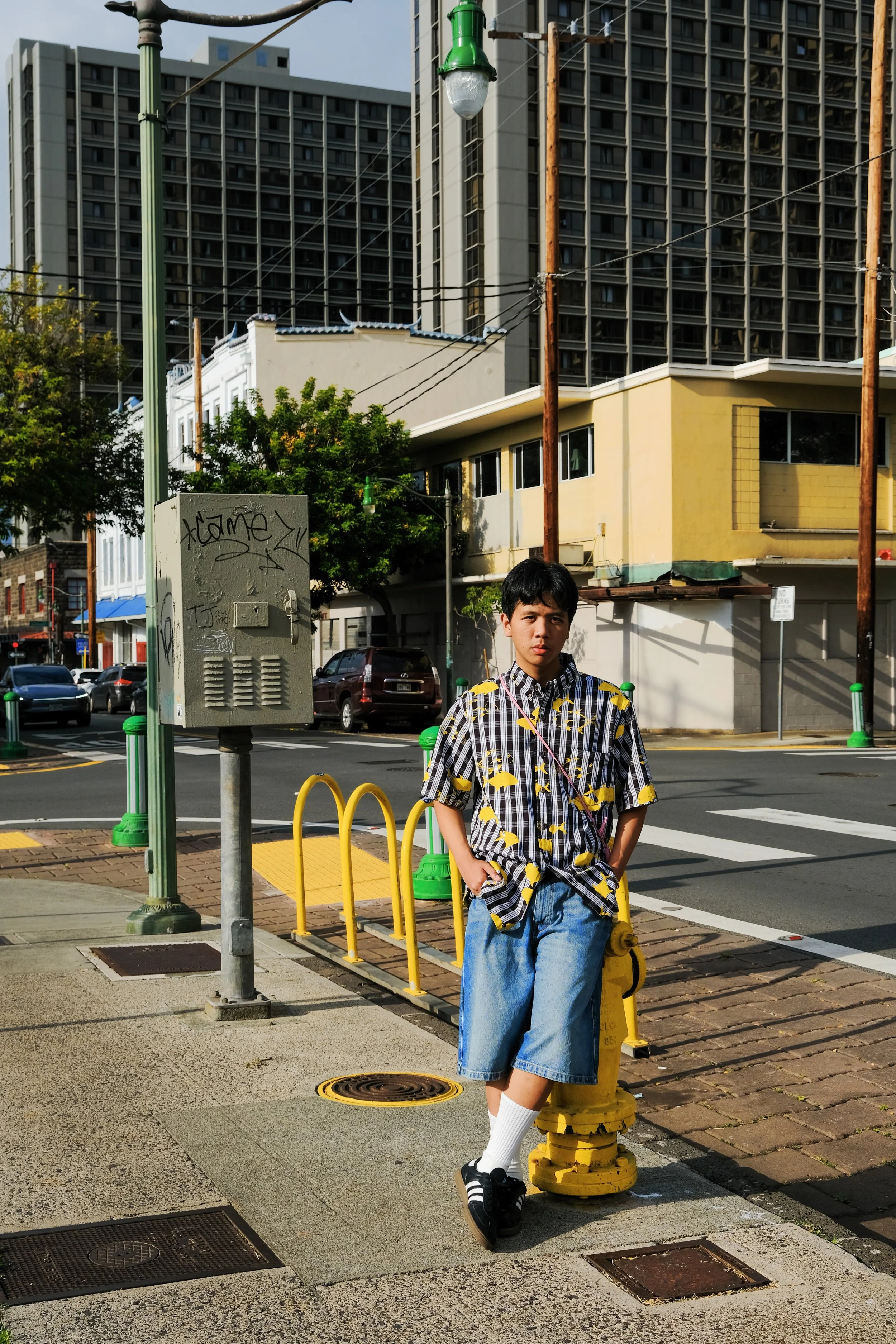
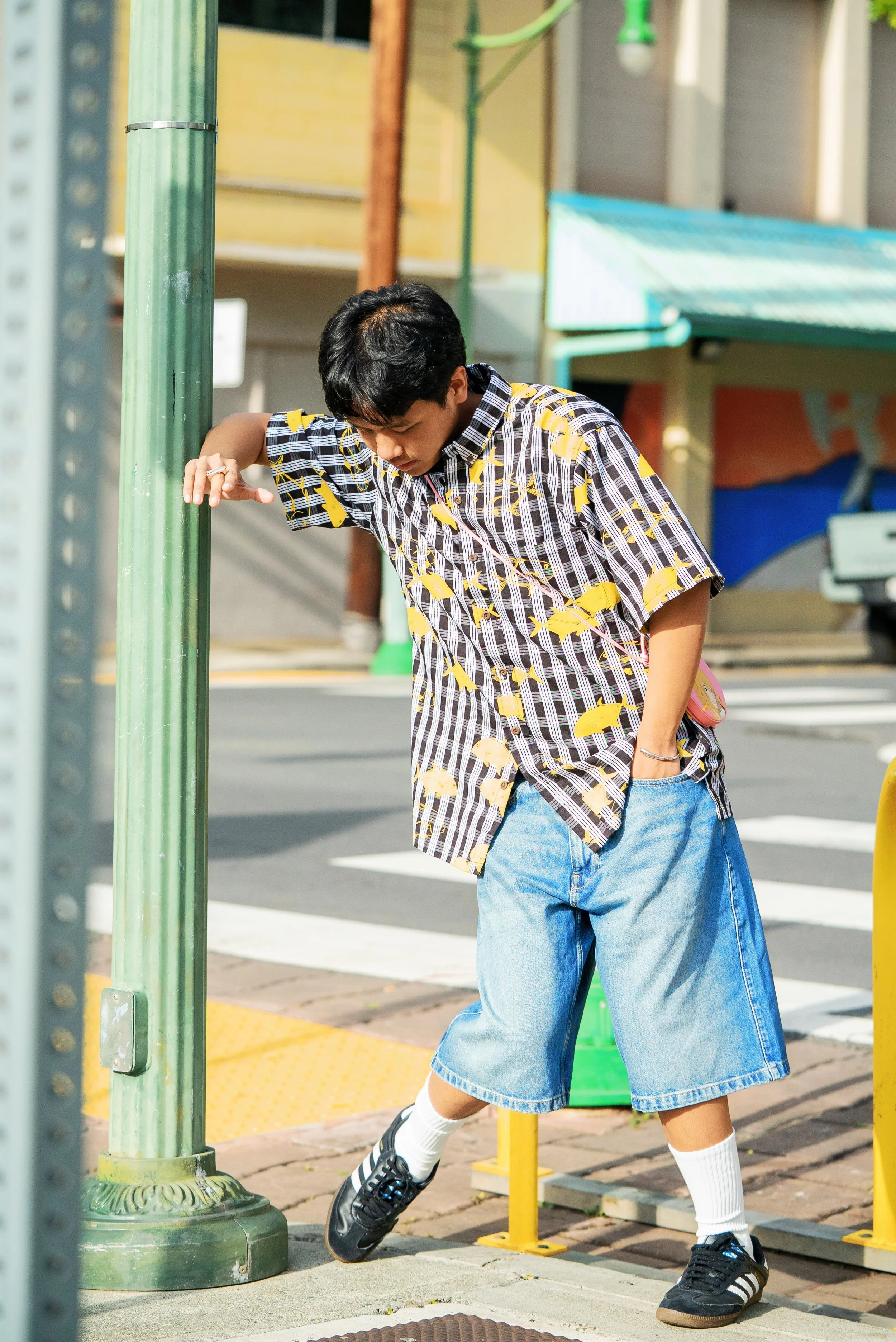
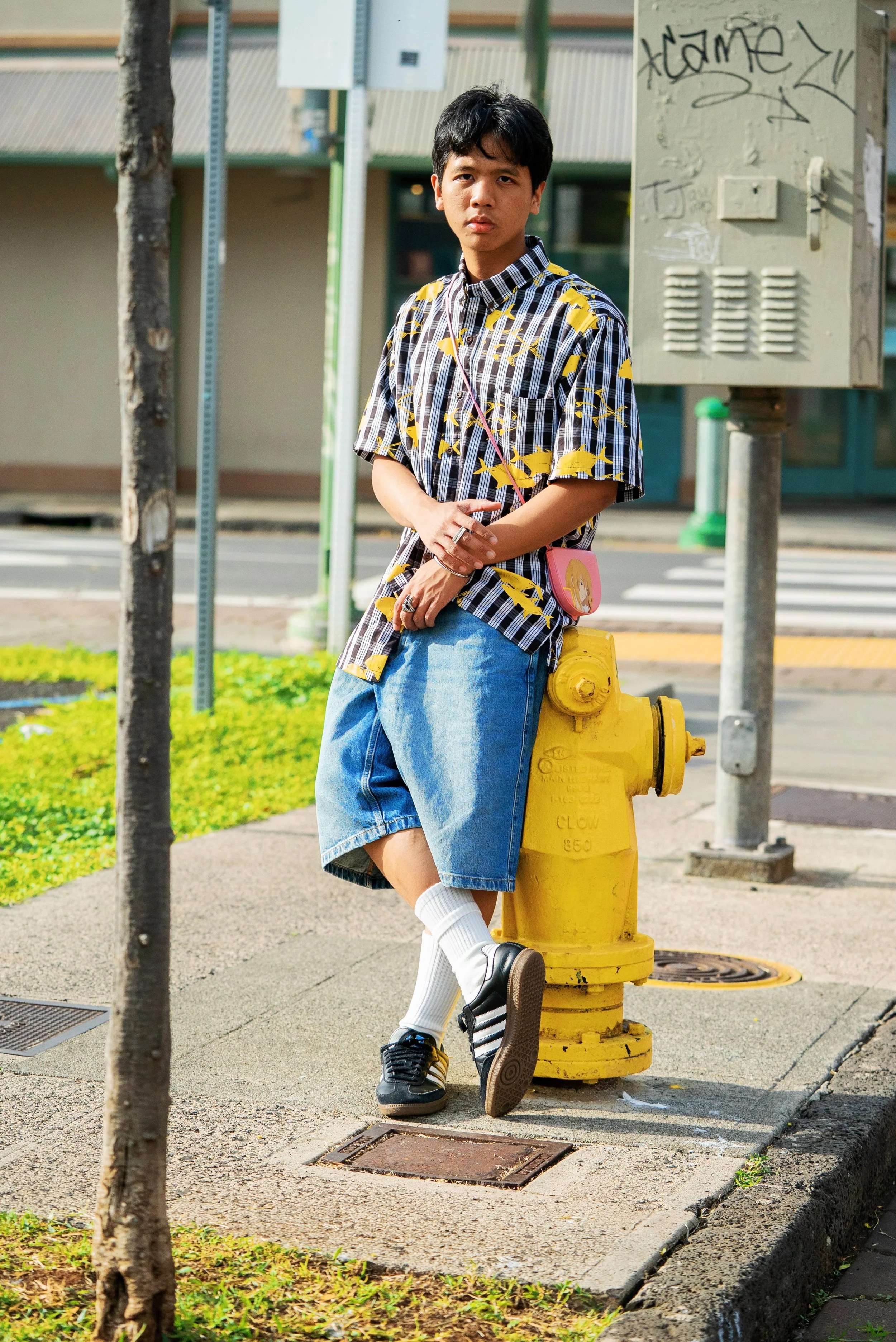
Steven is wearing a Sig Zane x Matt Bruening Collab shirt (Pāpiopio button up), a Zara denim jorts, an adidas sambas, and a loewe x studio ghibli coin bag
Genre is something that settles in afterward. Kou doesn’t sit down to make lovers rock or R&B. He strums an acoustic guitar the way someone might write a folk song, without much concern for where it fits. Reggae rhythms surface later, almost on their own. R&B comes through in the voice — in phrasing, in restraint. Lately, he’s been warming up to “Ave Maria” and D’Angelo, an unlikely pairing that makes sense once you hear how he moves between control and release.
His relationship to culture follows the same logic. Filipino musical traditions like kundiman, harana, and rondalla aren’t genres he tries to recreate. What stays with him is their spirit — guitar-forward melodies, emotional clarity, the sense that music is something shared rather than performed. “It’s not the form,” he says. “It’s the feeling.”
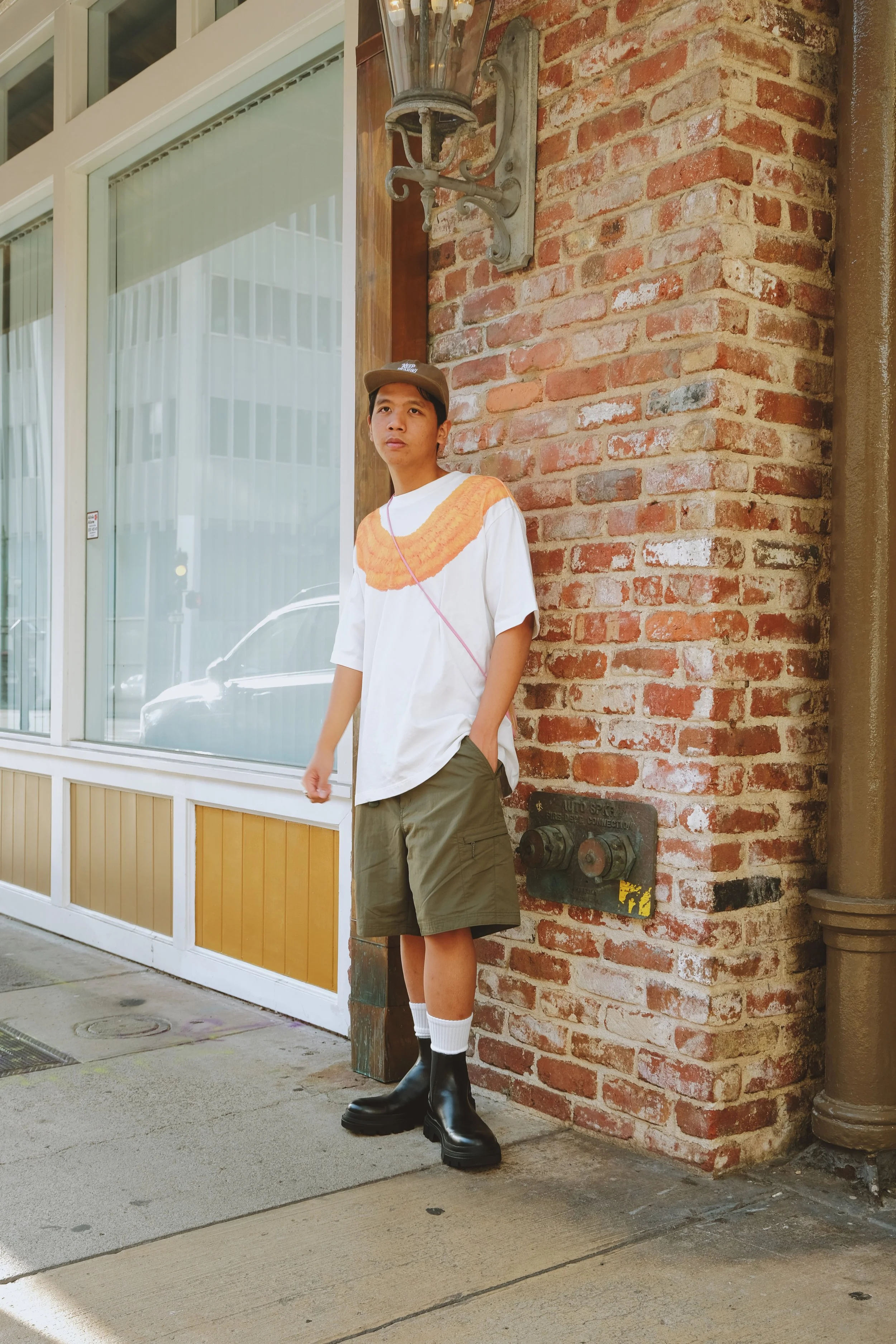
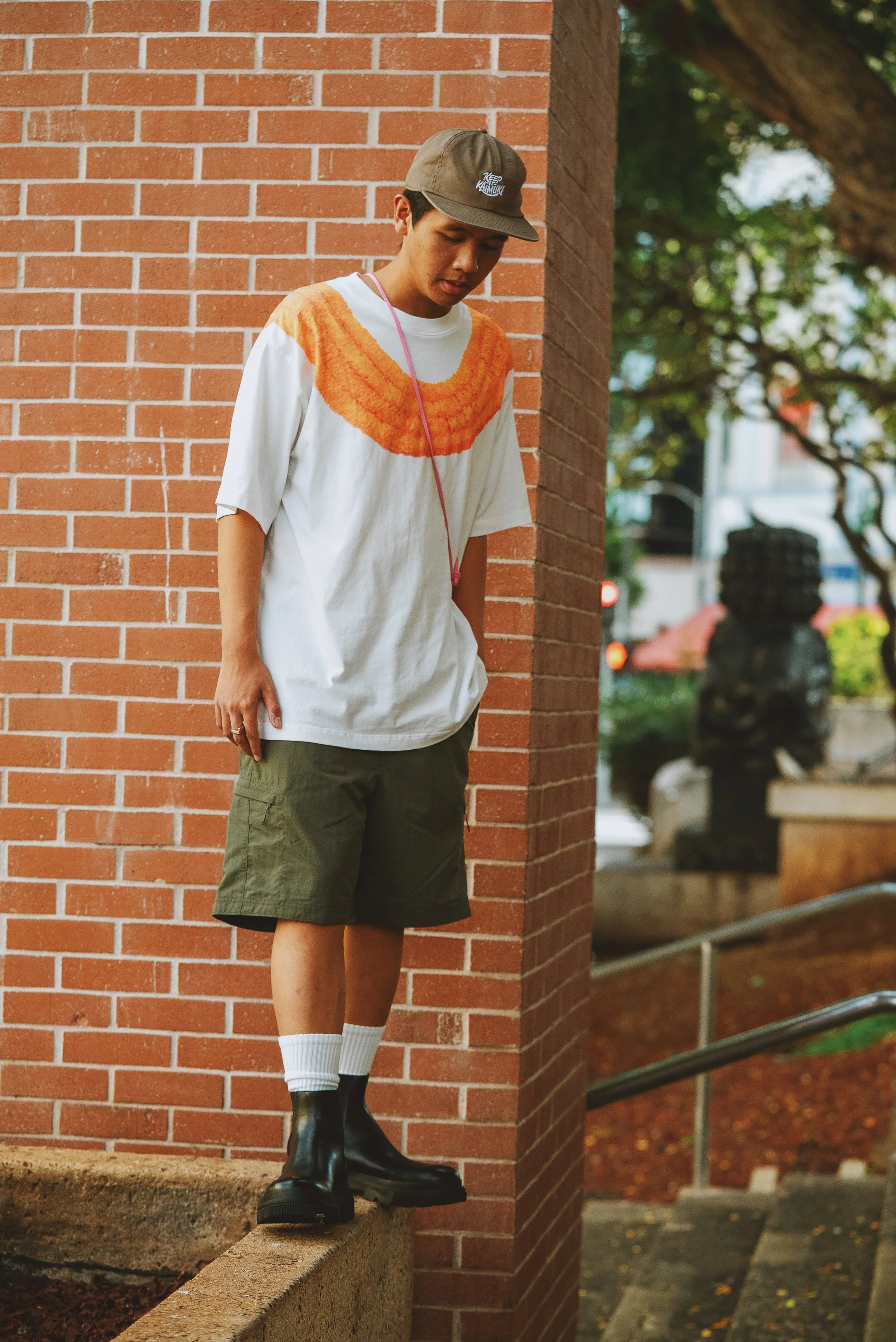
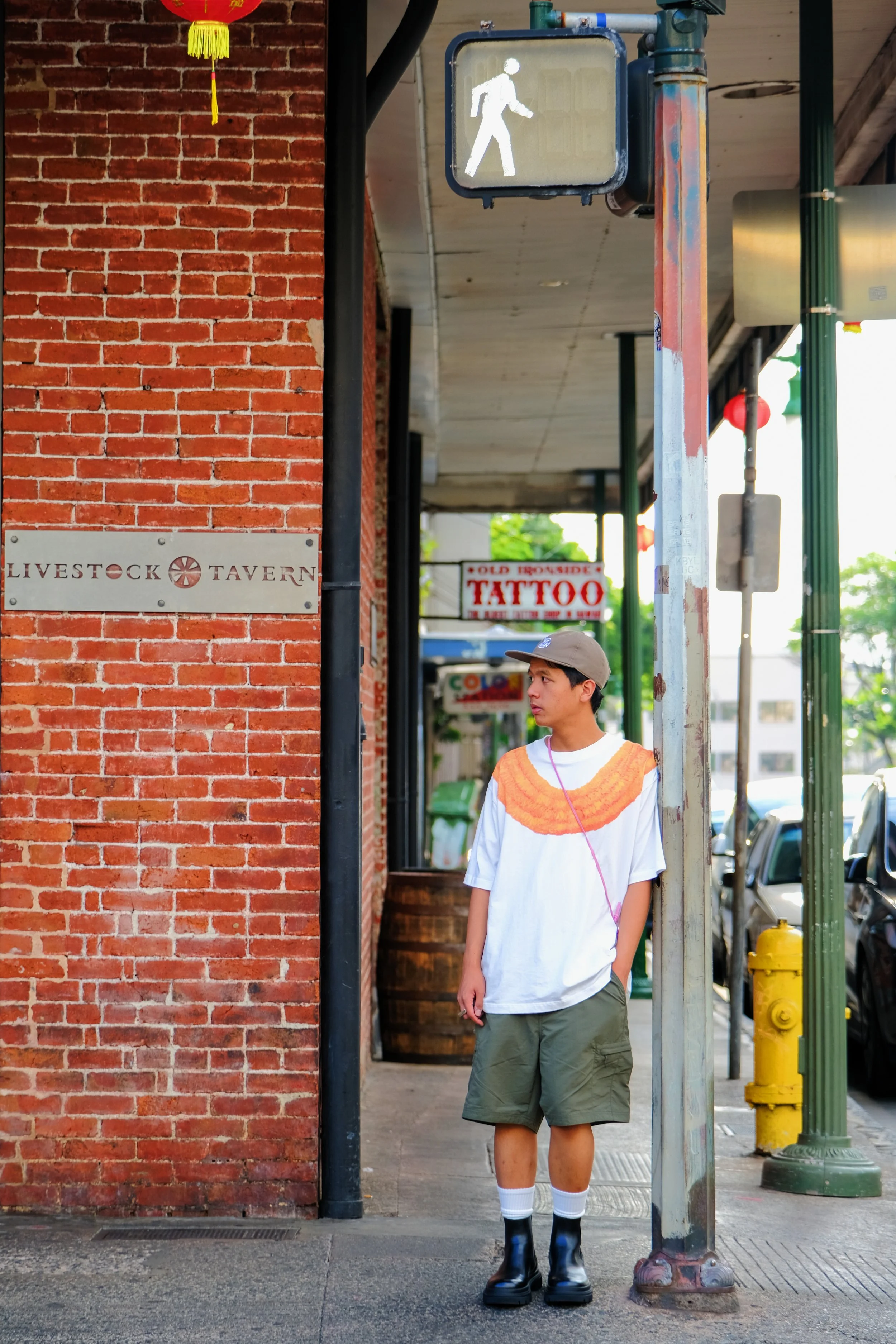
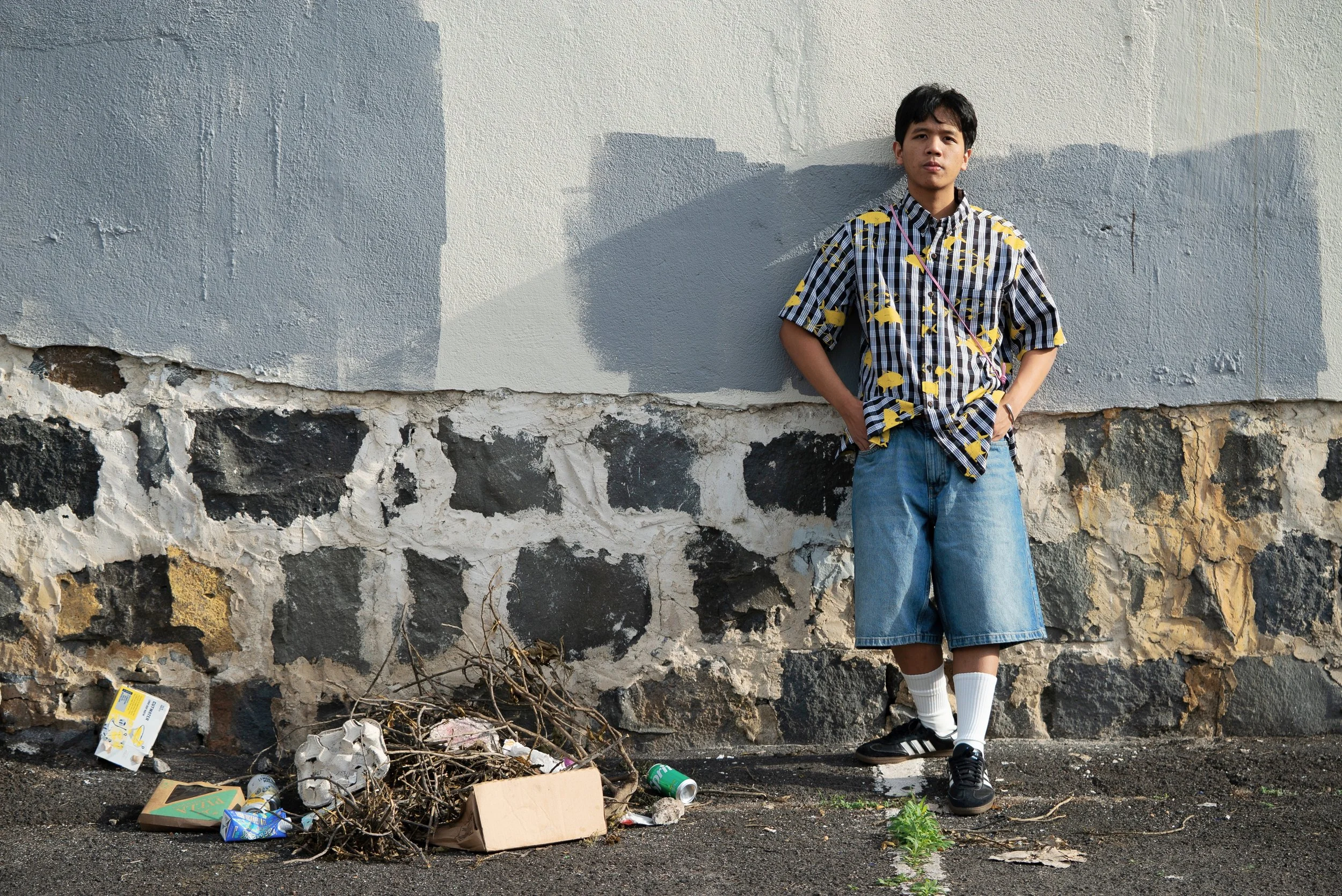
Steven is wearing a Rocket Ahuna (Lei ʻIlima shirt), shorts from Uniqlo Hawaii, a hat from Keep it Kaimuki, and shoes from Zara
Hawaiʻi shapes him in a different way. Reggae is part of the everyday soundscape here, woven into car rides, backyards, and long afternoons. Kou talks about it with care. He’s drawn to the skank guitar, the one-drop rhythm, the way the groove settles into the body without demanding attention. “It makes you want to move,” he says.
When asked about artists he looks up to, Kou mentions Sade for her calm and consistency. Locally, he gravitates toward musicians who blur genres, especially those folding jazz into reggae.
“It makes you want to move”
Being labeled a “local artist” is something he’s learned to sit with. Kou knows the space he occupies — Filipino, raised in Hawaiʻi, making music that doesn’t line up neatly with expectation. He doesn’t try to explain it away. He leans into what’s familiar. Local phrases. Ordinary places. Song titles that carry meaning without spelling it out. “Shoyu” is one of them — a phonetic play on “show you,” repeating throughout the song as both invitation and hesitation. “I don’t wanna show you,” he sings, turning emotional restraint into something quietly recognizable. It doesn’t need explanation. If you know, you know.
That sensibility carries into how he presents himself. Loose jeans, utility shoes, and a rotation of local designers worn without much ceremony. He’s drawn to pieces that hold meaning subtly — a kalo print you might miss if you aren’t looking for it, a silhouette that feels lived in. Fashion, for Kou, works the same way music does.
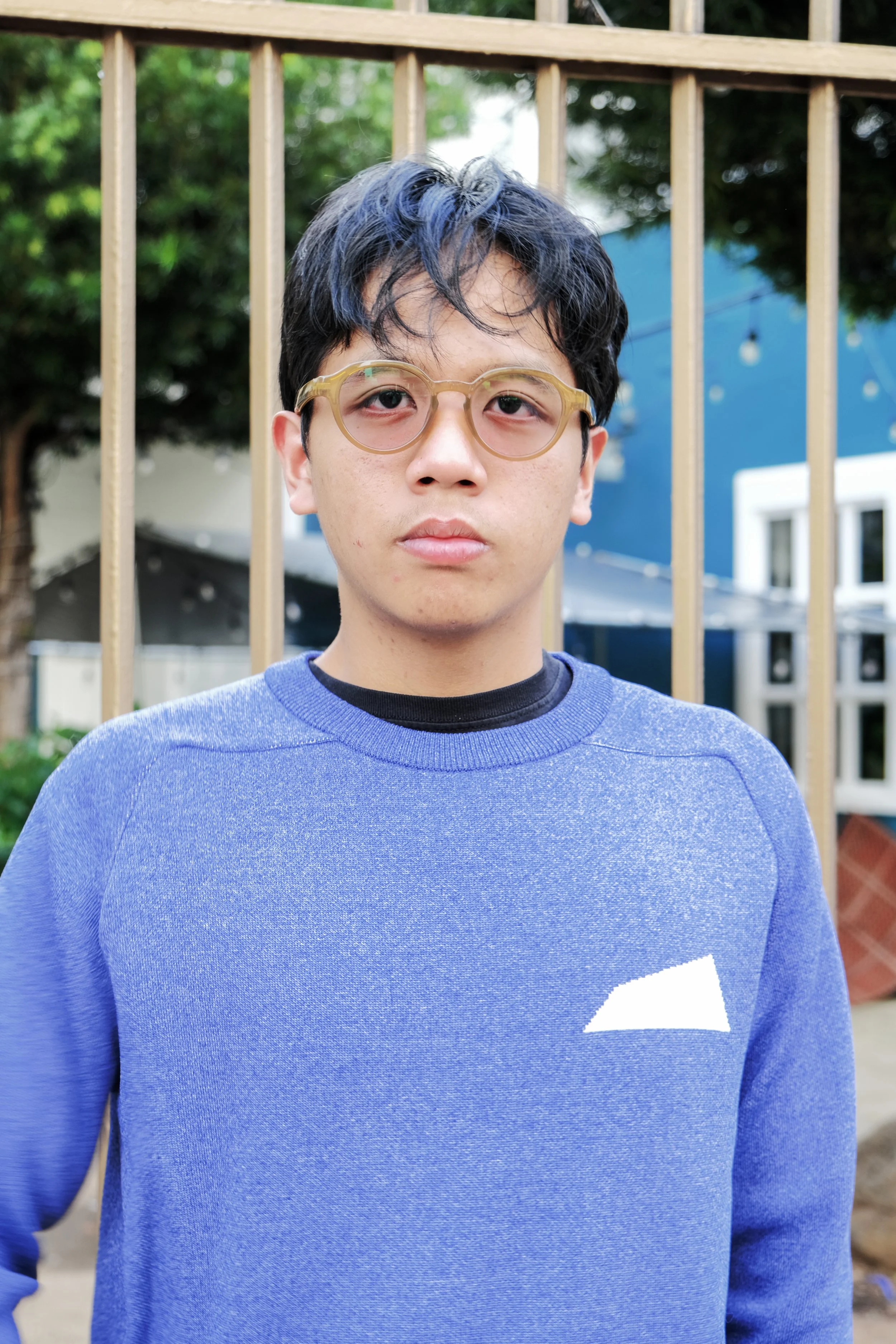
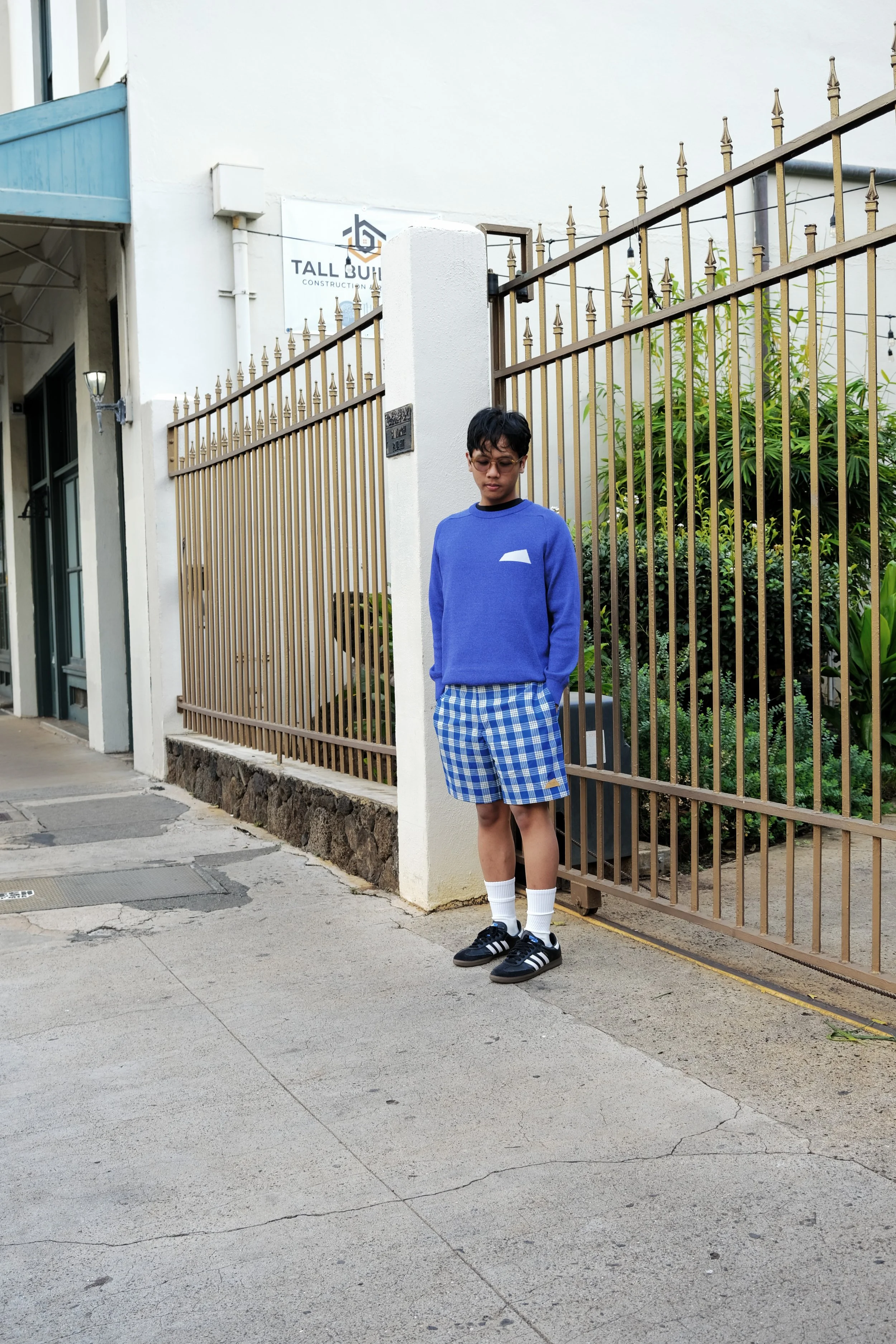
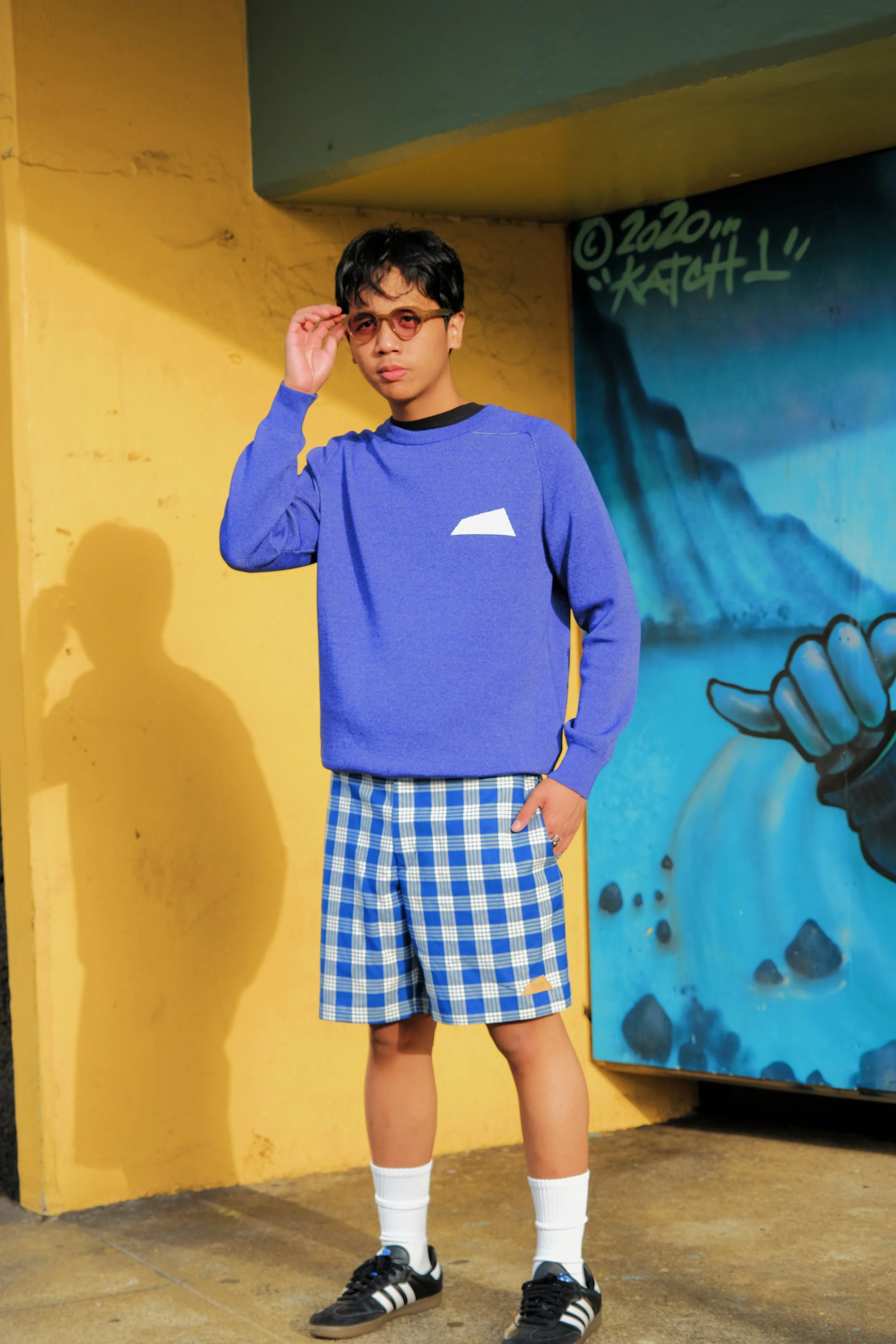
Steven is wearing a salvage public sweater, savage public palaka shorts, salvage public glasses, and adidas sambas.
The idea of emergence makes him uncomfortable. He doesn’t think of himself as arriving anywhere. He’s focused on working. Making music because it feels necessary. Putting it out because it feels honest. “If more people tuning in is an emergence,” he says, “then maybe that’s what it is. But I’m just doing what I do.”
That steadiness defines this moment. He’s toured the mainland. His audience is growing. Still, his perspective hasn’t shifted much. Music remains unpredictable. One week produces nothing worth keeping. The next delivers something that feels complete. He’s learned not to read too much into either. Mastery was never really the point.
Even when he isn’t actively producing, Kou is collecting fragments. Voice memos pile up on his phone. Melodies, half-lines, moments he doesn’t want to lose. Technology makes it easier to catch ideas before they disappear, to hold onto them without smoothing them out too soon.
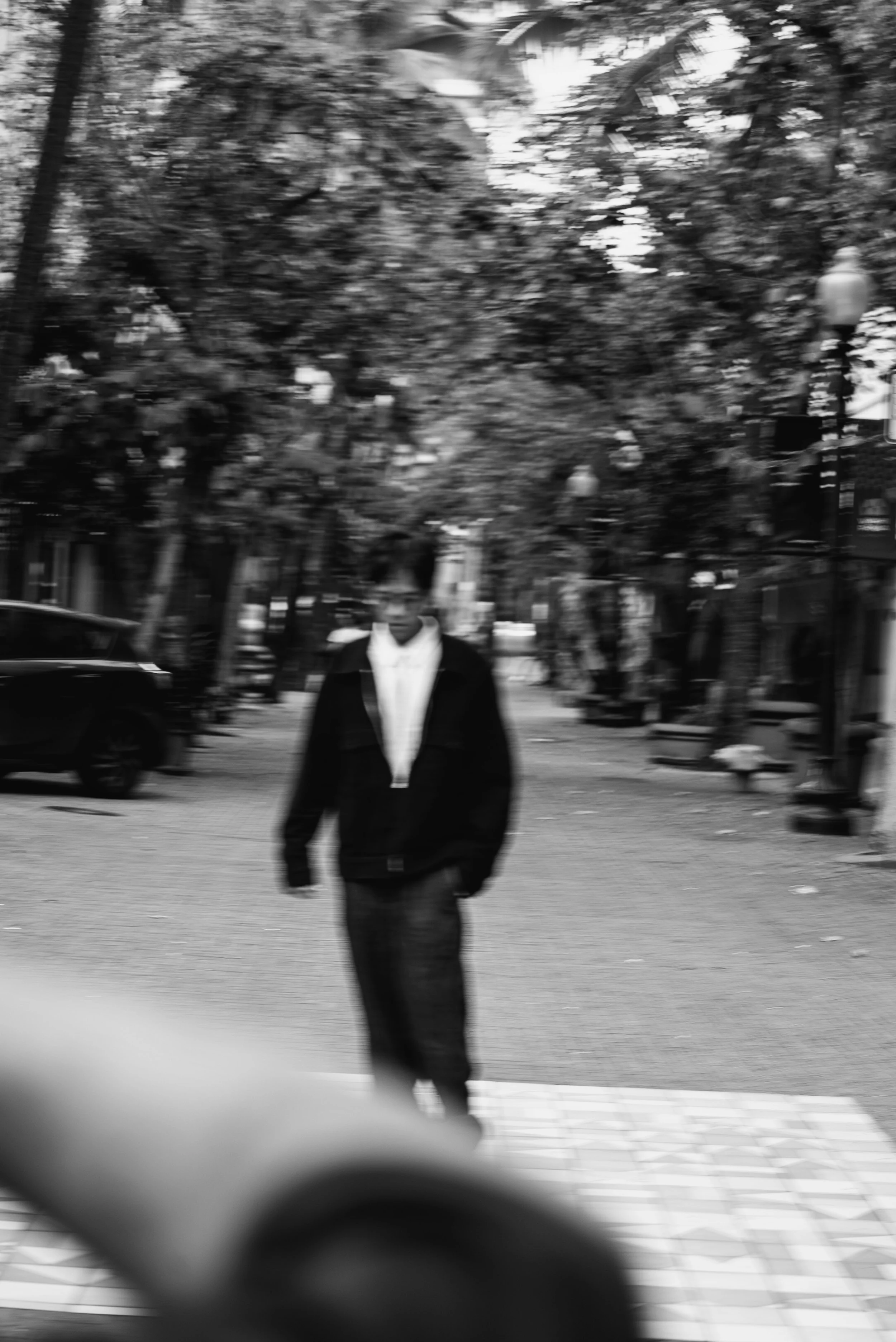
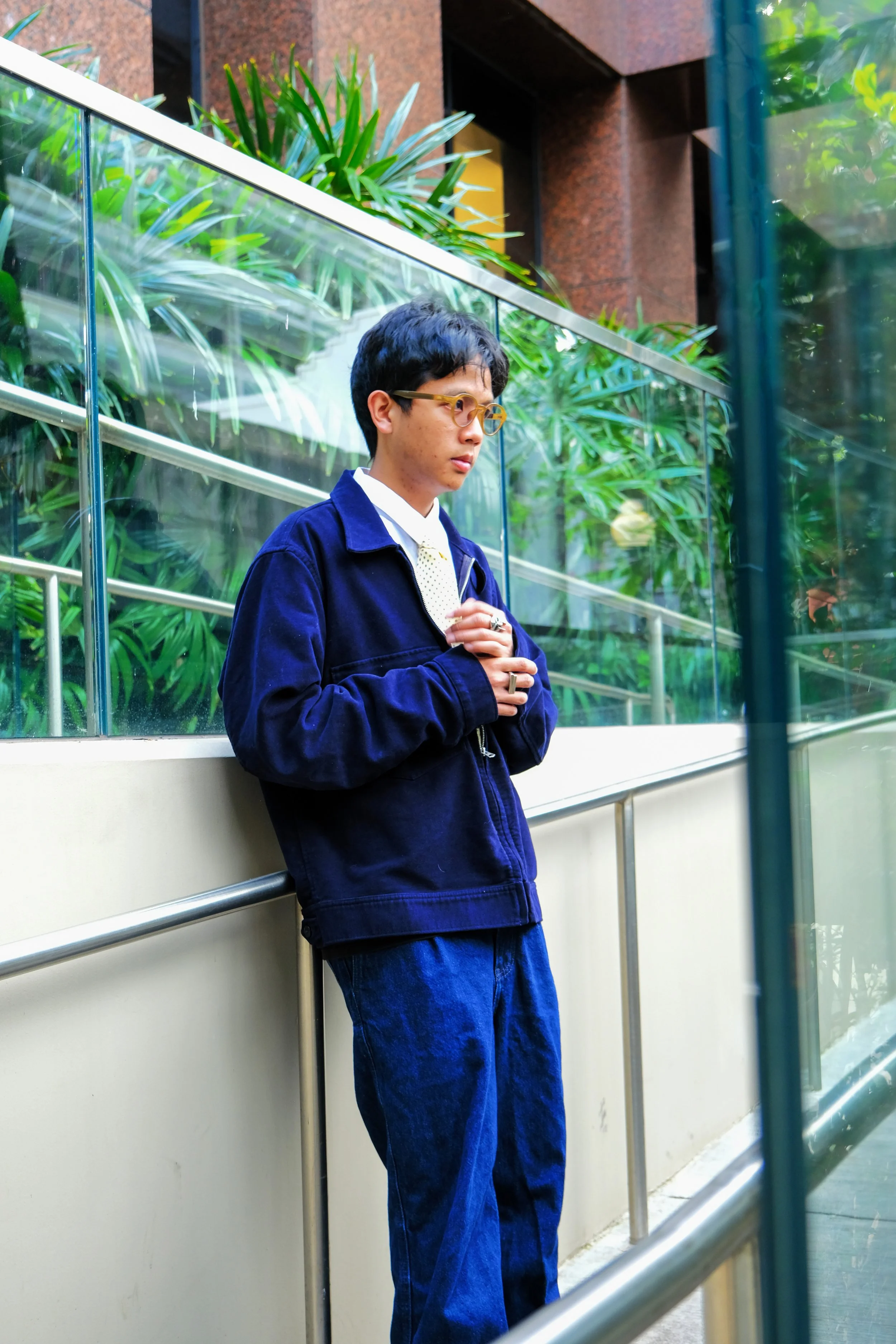
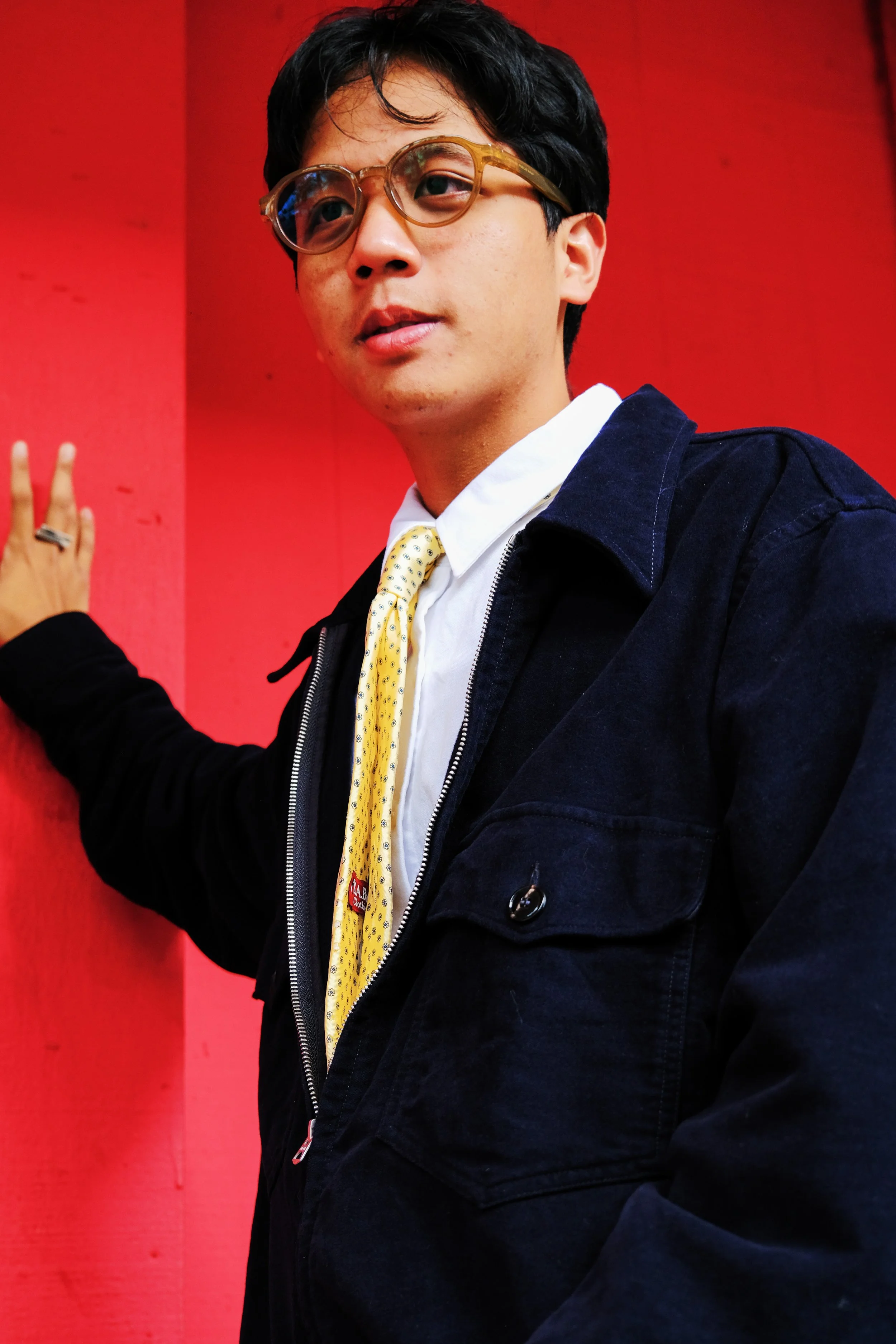
Steven is wearing a buck mason jacket, a uniqlo x jw anderson cropped button down, a salvage public glasses, uniqlo denim, a title of work ring, and zara boots.
Asked what he hopes listeners hear ten years from now, Kou pauses. He doesn’t talk about relevance or legacy. He talks about memory. Music as something tied to a moment. A place. A version of yourself you didn’t realize you’d miss. “Every memory is attached to music,” he says. “I hope it brings people back.”
Emergence, in that sense, isn’t about visibility. It’s about accumulation. About letting the work gather weight over time. Kou isn’t rushing toward a definition. He’s building something slowly, one Saturday at a time.
credits:
styling & creative direction - cedie & curvel studio (mark & tim)
photos - tim l., tim w., mark